

Turning sunlight into hot showers and AC power
There are two types of solar panel available today, each with a specific purpose:
- Solar Photovoltaic: for converting solar energy into electricity
- Solar Thermal: for converting solar energy into heat
Below is how these two technologies have allowed us to harness the renewable energy of the sun and use it to sustainably power and heat our homes, commercial spaces and much more.
Solar PV

PV Uses a network of solar cells, made of silicon, which are linked together to form a panel.
Panels can be sized or linked together to meet specific energy requirements
When sunlight shines on the panels an electrical field is created across the cells
This allows an electrical current to flow through the layers of cells
The greater the intensity of light, the greater the flow of electricity

The result is Direct Current (DC) electricity, which is passed to an ‘inverter’
The inverter changes the DC into Alternating Current (AC) electricity
AC is what we use everyday as mains electricity
The inverter then supplies this usable AC power to us through the fuse board

If the energy created is less than required the remainder is drawn from the national grid, helping to keep your energy bills low
If the energy created is more than required it could be exported to the national grid, potentially earning you incentive payments (see our financial incentives section)
Alternatively, battery storage systems can be used to store excess energy for use at a later time, rather than releasing it to the national grid
Solar Thermal
Solar thermal heating systems harvest solar energy by absorbing the suns energy through a ‘collector’ and converting it to heat.
Collectors come in a wide range, and each have different purposes and temperatures.
AES Solar manufacture ‘flat plate collectors’, consisting of a metal ‘absorber’ housed in an insulated box with a transparent cover to allow sunlight to enter.
Absorbers are usually made with a highly conductive metal with a special coating to maximise the light absorbed and converted to heat.
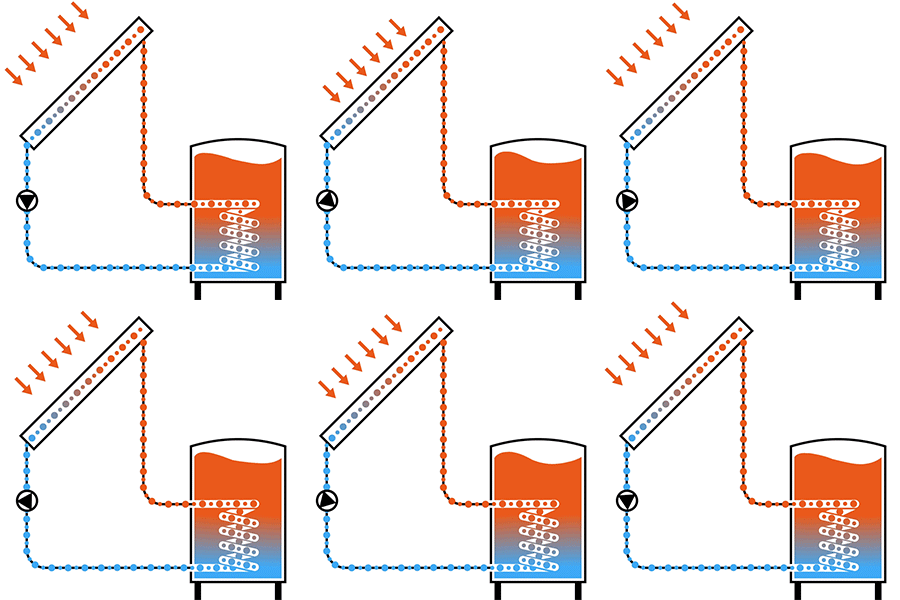
Heat collected by the panel is transferred to a specialised heat transfer fluid
The heat transfer fluid circulates within a solar loop linking the solar collector to a ‘heat exchanger’, typically a coil in a cylinder
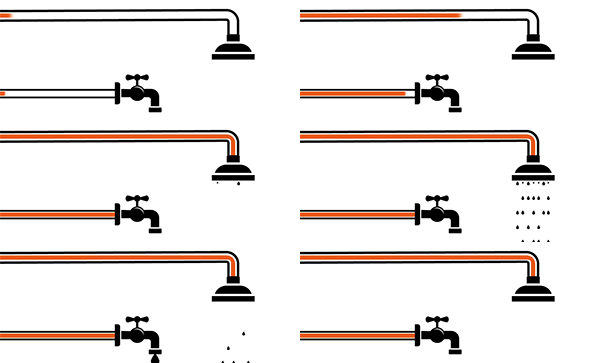
As cold water enters the cylinder it absorbs heat from the copper coil and exits as hot water, ready for central heating, washing, bathing etc.


